How to survive August in Rome: AC, shaded routes, and where Romans actually go
An owner's honest guide to August in Rome — AC that actually works, shaded walks from Monti, pools and lidos that stay open, and why an empty city is worth the heat.
Last updated:
A short note for guests who write to us before booking, asking whether a coeliac can eat breakfast at an Italian hotel in Rome without spending the morning worrying. The honest answer is yes — with a few caveats and a useful map.
Italy treats coeliac disease as a public health matter, not a lifestyle. The national body is the Associazione Italiana Celiachia — AIC for short — and its work shapes how seriously a Roman kitchen handles gluten.
The relevant programme is called Alimentazione Fuori Casa (“eating out of the house”), usually shortened to AFC. A restaurant in the AFC network has gone through training with AIC: the owner, the chef, and anyone who handles food learn the rules for separation of utensils, dedicated cookware, cleaning protocols, and sealed packaging. AIC then visits periodically to confirm the place still operates the way it was taught.
In practice this means three things. First, an AIC-certified restaurant takes the dietary requirement seriously enough to invest staff time and kitchen space in it. Second, the network is updated — places lose their accreditation if they stop following the protocol. Third, you can find them.
For visitors who are not AIC members, the association sells a fifteen-day version of its app called AIC Mobile Welcome for a few euros. It maps every certified bar, restaurant, bakery, and pharmacy across Italy. If you are travelling for a week with a coeliac in the family, it is the single most useful download you can make before you land.
The other thing worth knowing: in Italian supermarkets and most pharmacies, gluten-free pasta, biscuits, and snack bars are kept in a small dedicated section and marked with a crossed-grain symbol. Schär, the Bolzano-based brand, is the one you will see most often. Coeliacs registered with the Italian health service receive a monthly stipend toward these products — which is why every neighbourhood pharmacy near Termini stocks them. They are not curiosities here.
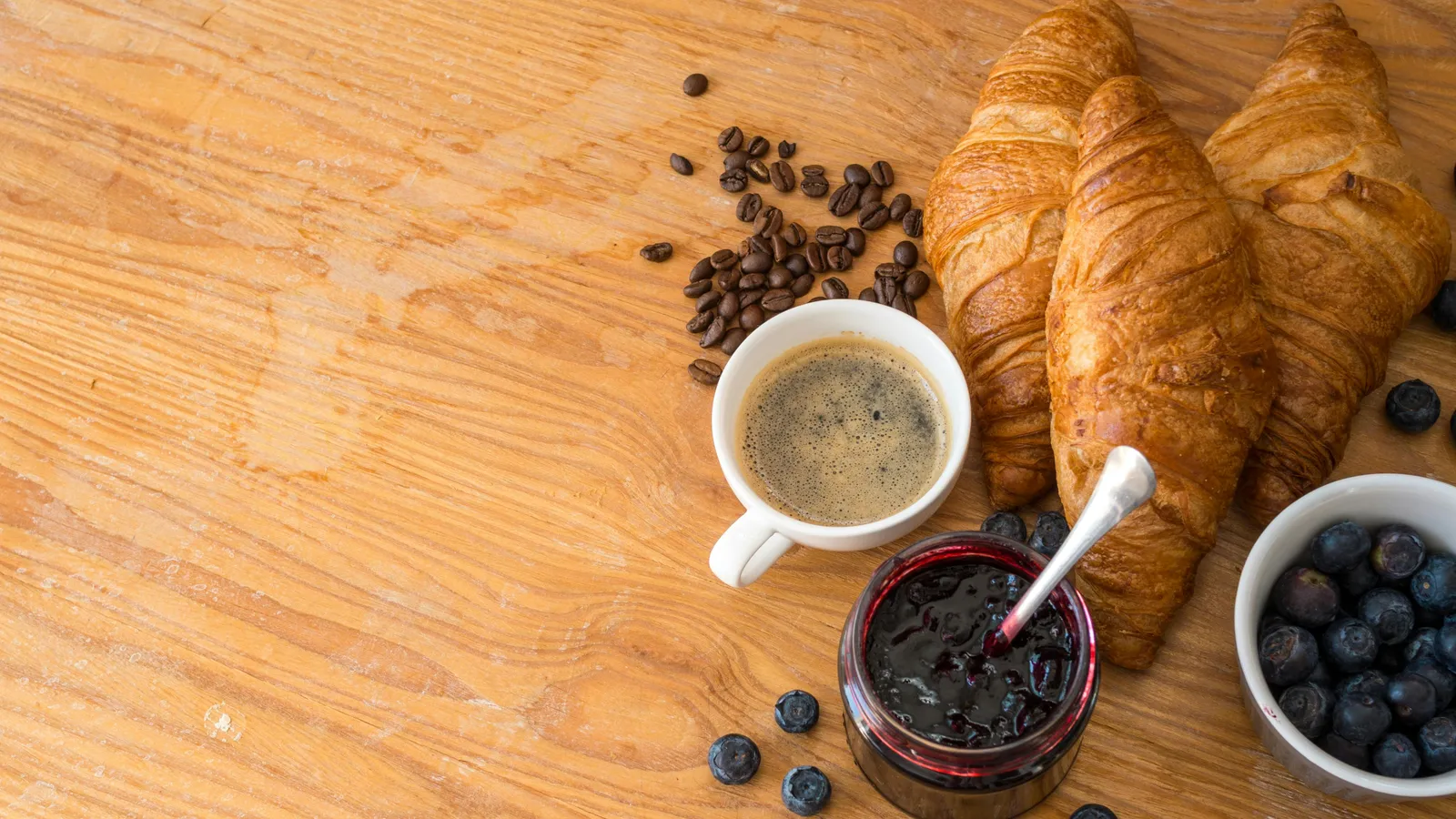
Italian breakfast at the hotel is, by design, a narrow set of things done well: La Marzocco espresso, cornetti delivered each morning from a Monti bakery, cured meats, cheeses, fruit, jams in proper dishes, and fresh-squeezed orange juice from Sicilian fruit when it is in season. You can read the full description on our Italian breakfast page.
For coeliac guests, the practical answer is this: tell us at booking, or by email at least a day before arrival, and the breakfast room is set up differently for you.
Specifically, we keep certified gluten-free cornetti and bread on hand — the kind that comes in sealed AIC-marked packaging — and bring them out plated separately when you sit down. There is a dedicated toaster used only for gluten-free bread, with its own serving tongs. Jams arrive in small individual dishes, untouched by a knife that has been near a regular cornetto. Lactose-free milk is on the counter without notice.
I want to be clear about what we are and are not. We are an independent twenty-four-room hotel, not a restaurant with two separate kitchens. The pastries are baked in a shared bakery; the coffee bar shares a counter. Our protocol is reliable for guests with non-coeliac gluten sensitivity and for the great majority of coeliac guests who travel comfortably in Italy when sensible separation is in place. For guests with the most severe form of the disease — where any shared kitchen is a risk — I would not in good conscience claim our breakfast is suitable, and I would point you to one of the dedicated gluten-free spots a few minutes’ walk away. They exist, they are good, and Monti has more of them per square metre than most cities have at all.
If you write to us, we read it. Practical questions about ingredients, packaging, or how a particular morning will go can be answered before you book — that is what the contact page is for.
The Monti district sits between Termini and the Colosseum and is unusually well-served for gluten-free eating. Walking times below are from Via Panisperna, where the hotel is, measured at a normal Roman pace — neither dawdling nor in a hurry.
Three minutes from our front door, around the corner onto Via Urbana. Grezzo is a 100% plant-based, dedicated gluten-free pastry shop and chocolatier — no flour enters the laboratory. The conceit is “raw” pastry: nothing baked above 42°C. In practice that means dense chocolate cakes, pralines, gelato in gluten-free cones, and pastries that have a different texture from a cornetto but are interesting in their own right. For a mid-morning snack between the Forum and the hotel, it is the closest safe option.
Three or four minutes from the hotel, in a quiet pocket of Monti most tour groups never reach. Fatamorgana is owned by a coeliac and the entire shop — every flavour, every cone, including the chocolate-and-pistachio dipped ones — is dedicated gluten-free. The flavour list runs to creative experiments alongside the classics, so be prepared. Not breakfast strictly, but several of our guests stop here on the walk back from the Colosseum and I have stopped counting how many tell me it changed their idea of what a coeliac can eat in Italy.
Roughly twelve minutes on foot, between Santa Maria Maggiore and Termini. La Gallina Bianca is a full pizzeria-trattoria on the AIC AFC list — every dish on the menu has a gluten-free version, the pizza dough included, with attention to flour-dust contamination in the kitchen. For lunch on an arrival day or breakfast if you want something more substantial than a pastry, it is the most accessible AIC-certified sit-down kitchen between us and the station. They open later than a hotel breakfast room, so plan it as an early lunch rather than 7:30 a.m. coffee.
Around eighteen to twenty minutes on foot, or shorter if you take the 75 bus from Via Cavour. Dedicated gluten-free, in the AIC circuit, near the Pantheon. Pandalì does the lunch-pause format Romans actually use: salads, calzones, sandwiches, savoury bakes, sweets, even gluten-free beer. It is open from morning through early afternoon on weekdays and longer on weekends. Worth the walk on a sightseeing day around Largo Argentina and Campo de’ Fiori.
Not strictly walking distance — it sits across the river near the Vatican walls — but it is the dedicated gluten-free bakery most often recommended by Roman coeliacs, so I include it for the sake of the list. From Cavour, the metro B to Termini and the metro A to Ottaviano takes about twenty minutes; the bakery is a five-minute walk from Ottaviano. If you are visiting the Vatican Museums anyway, route lunch or breakfast through here. Bread, focaccia, pastries, savoury slices — all entirely gluten-free, in a kitchen that has never used wheat flour.
A general note. AIC certification is not the same as a fully dedicated gluten-free kitchen. Both are safer than an untrained restaurant; the dedicated places (Grezzo, Fatamorgana, Pandalì, Le Altre Farine) carry no risk of flour cross-contact at all. Most coeliac travellers I have met in fifteen years of hotel work in Rome and Florence do well at AIC-trained restaurants too, but the choice between the two is yours to make.
Beyond the certified spots above, two practical recommendations from a hotelier who has sent guests to both for years.
Mama Eat — Via di San Cosimato 7/9, Trastevere. Not in Monti — it is across the river, about thirty minutes on foot or a twenty-minute tram ride from Cavour — but worth the trip. Mama Eat operates two kitchens, two pizza ovens, two chef teams: one for gluten, one without. It is AIC-certified and reliable for coeliac guests at the more conservative end of the spectrum. Our front desk has booked tables here often enough that I know the standard wait by heart on a Friday night. Reserve before you walk.
The Monti trattorias. A non-certified Roman trattoria can still feed a coeliac well if you ask correctly. The phrasing matters: “sono celiaco, c’è una contaminazione in cucina?” — “I am coeliac, is there contamination in the kitchen?” — gets a more honest answer than asking whether something has gluten. Several places on Via dei Serpenti and Via Urbana will quietly bring out gluten-free pasta they keep specifically for coeliac diners; others will tell you frankly that they cannot guarantee separation. Both answers are useful. Our front-desk staff live within walking distance and know which trattorias do which — ask at reception when you check in and we will give you the current list, not a printed leaflet from 2019.
For lunch in the neighbourhood, Pandalì (above) is the dedicated option; for dinner, Mama Eat or one of the Monti trattorias with a reliable coeliac protocol. We can call ahead from reception in either case.
This is the part most non-Italian guests do not know: the Italian pharmacy is where you buy your gluten-free travel snacks. The reason is administrative — the national health service reimburses coeliacs for a monthly allowance of certified products, and pharmacies historically dispensed them — but the practical effect is that almost every farmacia in central Rome carries Schär biscuits, breadsticks, breakfast bars, and pasta on the shelf next to the sunscreen.
Three near the hotel that consistently stock the AIC range:
Ask for “prodotti senza glutine” — gluten-free products — and the pharmacist will point you to the shelf. Most have used the AIC training materials themselves; they know what they are selling. For a long train day to Florence or Naples, half an hour at the Termini farmacia will produce a bag of snacks that will see a coeliac through to dinner without anxiety.
A last, unromantic piece of advice. Carry a few bars in your day pack on sightseeing days. Roman museums are generous with their hours and stingy with their food options, and the Forum has nothing inside the gate. A box of Schär biscuits from a farmacia weighs nothing and removes the small running calculation that a coeliac otherwise makes all day.
If you are coming to stay with us and any of the above raises a question — the breakfast protocol, a specific dietary cross-issue, whether a particular bakery still has its AIC accreditation in the month you visit — write before you book. We answer every email personally. The room you reserve is on our rooms page; the specifics of your morning are between you and me.
An owner's honest guide to August in Rome — AC that actually works, shaded walks from Monti, pools and lidos that stay open, and why an empty city is worth the heat.
An owner's honest comparison of the four ways from Rome's airports to Monti — Leonardo Express, FL1, taxi, private transfer — with prices, journey times, and what to do if you land after midnight.
An honest owner's take on the 'hotel near Termini' search: what travellers actually want, why Monti is the eight-minute walk that gives you the same convenience without the station-at-night feel, and the practical train, luggage, and Sapienza tips that follow.